
Unit Testing in Laravel Pays for Itself Faster Than Most Teams Expect
When teams talk about testing in Laravel, they often jump straight to feature tests. Those are valuable, but unit tests still have an important place. They are especially useful when a project contains business rules, calculations, decision trees, transformers, or service classes that should behave consistently no matter how the UI or HTTP layer changes.
What unit tests are good at
Unit tests are most effective when they target logic that is:
- deterministic
- repeatable
- business-critical
- independent of HTTP rendering
Examples include:
- pricing rules
- availability calculations
- eligibility checks
- formatting or normalization logic
- custom validation helpers
- rule evaluation engines
These are exactly the kinds of places where subtle mistakes create expensive downstream issues.
Why Laravel projects benefit
Laravel applications often grow a layer of business services over time. Even if the project starts as a straightforward CRUD app, it usually evolves into something with more decisions embedded in the codebase.
When those rules are only tested manually through the browser, teams end up relying on memory. That does not scale well.
A simple example
Imagine a service that determines whether a customer qualifies for a workflow path based on account state, plan type, payment status, and region. That logic may look simple at first, but exceptions pile up.
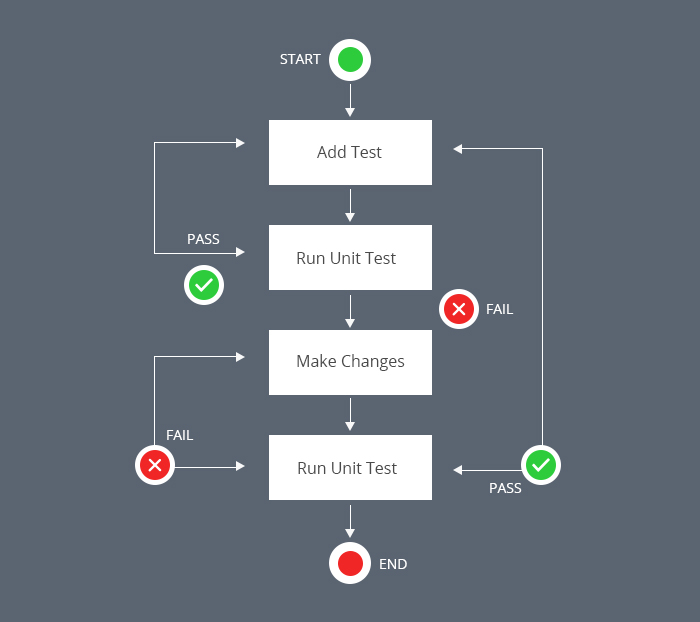
A unit test lets you lock in expected behavior directly:
it('marks overdue accounts as ineligible', function () {
    $service = new EligibilityService();

    $result = $service->check([
        'plan' => 'pro',
        'payment_status' => 'overdue',
        'region' => 'us',
    ]);

    expect($result->eligible)->toBeFalse();
});
That test now protects the rule every time the code changes.
Unit tests reduce fragile debugging
Without unit tests, debugging often starts late in the process:
- a QA issue appears
- someone traces it through multiple layers
- the team discovers a rule changed indirectly
With unit tests, that kind of regression is often caught much earlier.
Do not chase meaningless coverage
The goal is not to test everything for the sake of a percentage number. The goal is to test the places where the project carries real logic.
A handful of thoughtful unit tests around business rules can be more valuable than dozens of low-signal tests around trivial getters and setters.
Final takeaway
In Laravel projects, unit testing pays off fastest where business logic lives. If the application contains rules that affect money, access, workflow, or operations, that logic deserves dedicated tests.